From wearables and apps to EPRs and AI scribes, the healthcare system has never had a broader picture of patient health.
But it is up to frontline clinicians to make sense of an ever-expanding sea of data to improve patient care and outcomes.
Former trauma critical care nurse Kathleen McGrow understands the value of tech-enabled care more than most.
She also knows how it feels to hold a patient’s hand at their most vulnerable moment.
We speak to Kathleen, now chief nursing innovation officer at Microsoft, about the importance of putting the patient at the centre of health innovation and why nurses will never be replaced.
Q: What drew you to nursing initially and in particular trauma and critical care?
A: I come from a family of nurses, so it was kind of a no-brainer when I was leaving high school in Maryland and going into college.
I’m something of an adrenaline junkie so the the trauma and critical care side of the work was a natural fit.
The University of Maryland Shock Trauma is the number one trauma centre in the world and right in my hometown, so that was a huge draw for me too.
Q: What did you learn about patient care in that time?
A: It’s not as easy as everyone thinks that it should be, for one thing. It’s very complicated. There’s a lot to it.
You’re taking care of people at their most vulnerable. They may be on a lot of medications, they may not have any family around.
As a nurse, one of the biggest things we can do is advocate for our patients and make sure that they’re getting the care that they need.
Q: How have those experiences influenced how you approach technology today in your role?
A: Before we go there, I’ll tell you how I got into informatics.
I was working in the Trauma Resuscitation Unit (TRU) at The R Adams Cowley Shock Trauma Center at the University of Maryland. We’d go to the helicopter, bring the patient down to the TRU and get them ready to go to the OR.
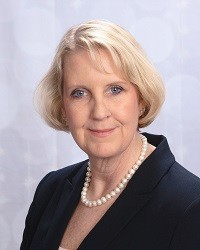
Kathleen McGrow
I had this 18-year-old female patient who’d been in a car wreck. Her arm flew out the window and amputated some of her fingers on her hand.
I was looking at her lab results, one for haematology and one was chemistry, and I was like, ‘why can’t I see all this information on the same screen?’
That was a real ‘a-ha!’ moment for me. I remember thinking, why can’t I see everything I need in one place? Isn’t technology supposed to help us?
I was very lucky that we had a nursing informatics programme at the University of Maryland School of Nursing. It was the first and only one in the country at the time. So my colleague and I decided to go back to school to study informatics.
Q: It’s interesting that you mention developers being disconnected from those who actually use new tech. It seems that decades later, that’s still a problem.
Is part of your role about trying to bridge those two things?
A: Yes, I would say that’s my sweet spot. I know a tonne about the clinical. I know enough about technology to be dangerous I’d say, and then I try to bridge that gap. So how do we explain to the developers what we really need?
My role now is more about looking at how I can help amplify the voices of many to get that feedback back to the developers so that they can build things that really are functional for the clinicians as well as for the patients.
Q: What misconceptions do clinicians have about the development of these technologies?
A: I think there’s some fear, uncertainty and doubt, especially when we are talking about artificial intelligence.
Some of it is just lack of understanding or fear – that idea that AI is going to take their job.
But I always explain to nurses that there will never be an AI or robot that’s going to gently touch a patient’s forehead and say, ‘I’m not going to let you die.’ I did that a lot in my role at the bedside.
Humans have empathy and wisdom that AI never will. AI is just there to help assist us.
We need to help amplify the nurse’s voice better back into that feedback loop.
Q: There’s obviously a huge amount of pressure on the global healthcare system at the moment.
Where do you see the biggest opportunities to use technology to ease some of that pressure?
A: There is a tremendous amount of pressure.
In the US, healthcare accounts for a significant amount of our gross domestic product. It’s a shame because we don’t see the results that we want from that investment.
I think we have to really look at how we leverage the technology to fix the problems that clinicians see every day.
It’s not just technology for the sake of using technology. We need to identify the problem and apply the right technology at the right time in the right place for that specific patient to improve the outcome.
We see a lot of data on the patients, but we don’t necessarily see everything for the patient, right? That whole 360 view. We’ve made it really complicated. I think we have to simplify it all.
Q: Could you explain a little bit about how Microsoft makes sure that clinicians understand the technology and that it actually helps patients?
A: We go in and identify exactly what problem clinicians are trying to solve and then look at the best way to resolve that problem.
Having the right people at the table to tell us exactly what they need is really important.
We need to be agile and flexible enough to deliver something in a pilot environment. For example, an AI agent, and then assess whether that agent is genuinely helpful.
If it is, how do we move it into production, expand its use and demonstrate its value?
Alternatively, how do we decide not to move forward?
The problem with ‘pilotitis’ is that projects often remain in the pilot stage because nobody can make a decision either way.
We try to help organisations work through those decisions.
Is this technology genuinely helpful? Can it be rolled out to more end users? How can we support implementation, identify training needs, gather feedback from healthcare providers and use that feedback to improve the technology?
Q: What does truly patient-centred digital health look like to you?
A: I’m an acute care nurse by background, so I tend to lean into the mindset that healthcare happens in the hospital.
But really, people spend maybe 1 per cent of their life in the hospital, and all the rest is outside.
So we have to figure out how to get data from all of their devices, how to understand that data and then how to incorporate it into their health data.
We also have to help patients take control of their healthcare and better understand it. Part of it is education and understanding where they want to contribute.
But it’s hard. Patients are at their most vulnerable [when they see us].
They’re sick. They’re on a lot of medications. They may have just gotten the worst news of their life. They may not have a family or support system.
We put a lot on the patients, and I think that’s where as a nurse, we really try to help advocate for them and really help them understand their healthcare.
But it can be really challenging.
Q: Of course, nursing is not going anywhere, even as technology continues to evolve.
But how do you see the role changing in the next five years as technology becomes increasingly important?
A: I’d like to see more nurses’ voices in the development of new technology. I want them to be at the table and actually ask questions.
I work with a lot of nurse leaders who tell me that they’re not in those meetings about AI governance, for example.
But being at the forefront of those discussions so nurses can interject or share their feedback is really important because often, decisions are made to nurses, not with nurses.
I think bedside nurses really need to be able to articulate their concerns as well.
We need to give them the confidence to talk to their manager or leader and say, ‘I have a concern about this, or ‘I have a question about this AI. Can I learn more about it?’
Q: What gives you the most optimism about the future of tech-enabled healthcare?
A: If we can leverage technology to make it better for the providers, the nurses, then we will make it better for the patients. It’s simple to say, but less simple to do.
When we look at technology across the board, we really have to ask: where is it causing friction and where is it making things smoother and a little bit easier? How do we help nurses get time back? And what are they doing with that time?
Are they spending more time educating their patients? Are they doing other tasks for their patients?
I think it’s really important to give them that time back and help them query the data so they have a better understanding of what’s going on.
But when we’re looking at technology and data, we can’t forget that, at the end of the day, it’s the nurse who’s using their wisdom, judgement and empathy to care for the patient and make sure they get the care they need.
There’s so much coming at nurses all the time. There’s so much that they have to do and are responsible for.
We need to help them to feel supported so that they can make those types of judgements and decisions.
Q: So it’s beyond the technology: it’s more about the person and encouraging them to do what they’ve been doing their whole career.
A: Yes, totally.
I think there’s been a lot of focus on the technology.
But I do hope we get back to the caring part of nursing because I think that’s really what patients need and what nurses really get such joy from.