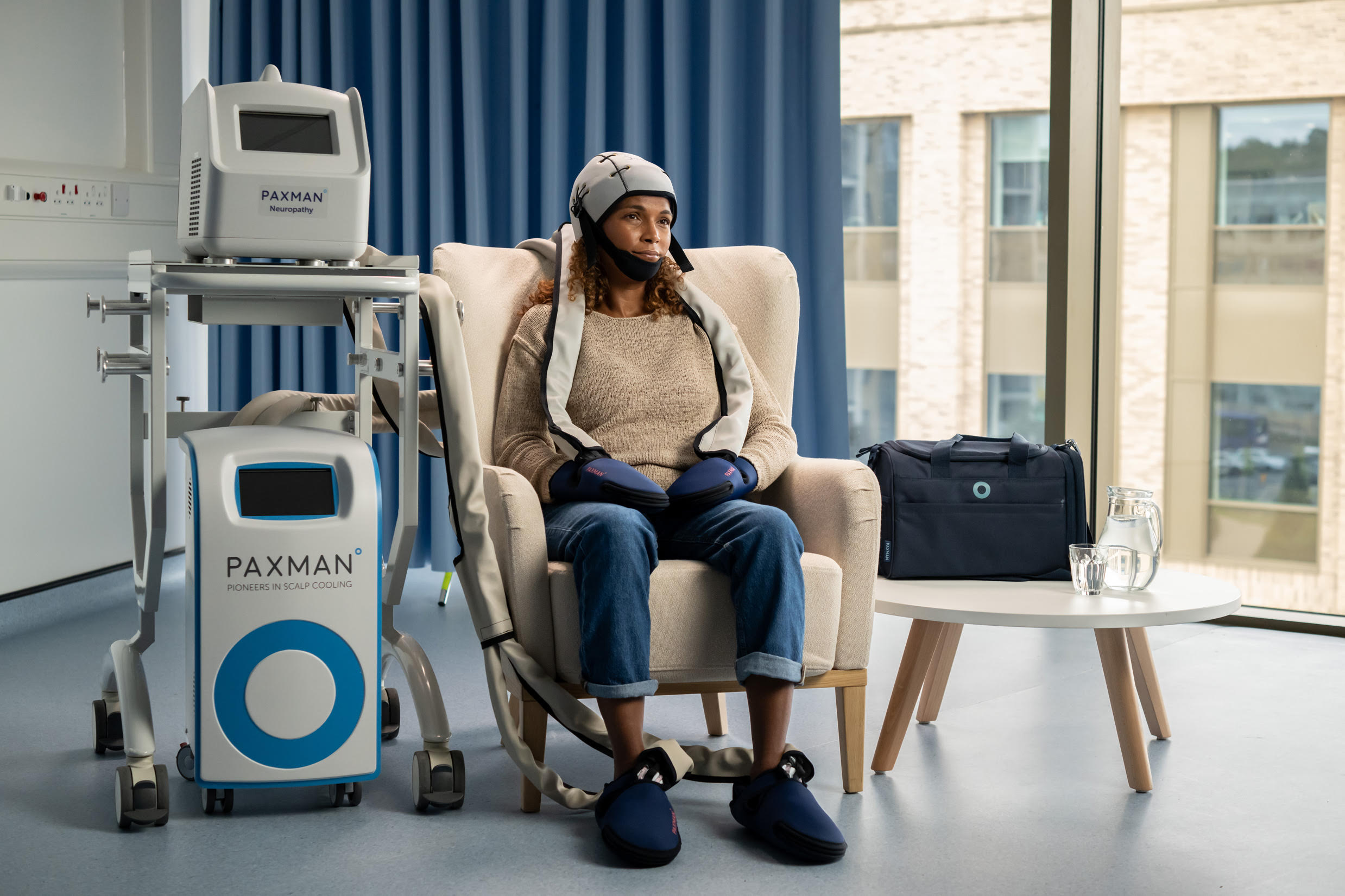
Paxman has launched a cooling device designed to reduce the risk and severity of chemotherapy-related nerve damage, expanding beyond scalp cooling.
The Paxman Neuropathy System combines cooling and compression, known as cryocompression, to help prevent chemotherapy-induced peripheral neuropathy (CIPN), a common side effect of cancer treatment.
CIPN can cause numbness, pain, tingling and loss of sensation in the hands and feet, with symptoms sometimes continuing long after chemotherapy ends.
The nerve damage can affect walking, writing, dressing and sleeping. In some cases, patients may need their chemotherapy dose reduced, treatment delayed or stopped altogether.
The launch is Paxman’s first major expansion beyond scalp cooling technology, which is used to reduce hair loss during chemotherapy.
The company has worked in scalp cooling for more than 25 years and strengthened its position in that market through the acquisition of Dignitana in 2025.
The new device targets a side effect for which there is currently no established preventive treatment in routine use.
Its commercial launch coincides with the publication of results from a prospective multicentre Phase I/II study involving patients receiving taxane-based chemotherapy.
The study assessed the device’s safety and tolerability and recorded rates of peripheral neuropathy.
Among 146 evaluable patients, none developed severe neuropathy, while clinically significant sensory symptoms reported by patients remained low throughout follow-up.
Researchers found the device was safe and well tolerated, with low rates of CIPN.
The findings support further investigation of cryocompression as a potential way to reduce chemotherapy-related nerve damage, although its effectiveness in preventing the condition has yet to be established.
A separate scientific review examining the causes, impact and potential prevention of CIPN identified cryotherapy and cryocompression among the more promising emerging interventions.
It also highlighted the effects of nerve damage on patients and healthcare systems, and the need for effective preventive treatments.
Richard Paxman, chief executive of Paxman, said: “Chemotherapy-induced peripheral neuropathy can have a profound and lasting impact on patients, yet there are currently very few options available to help prevent it.”
Following recent regulatory approvals, the system is being launched in the UK, France, Germany, the Netherlands, Spain and Italy.
Pilot programmes are already underway in the UK, with expansion into additional European centres expected in the coming months.
Further research into cryocompression is continuing through the randomised SWOG S2205 ICE COMPRESS study in the US.
A separate clinical trial evaluating the Paxman Neuropathy System is also underway at the Dana-Farber Cancer Institute.